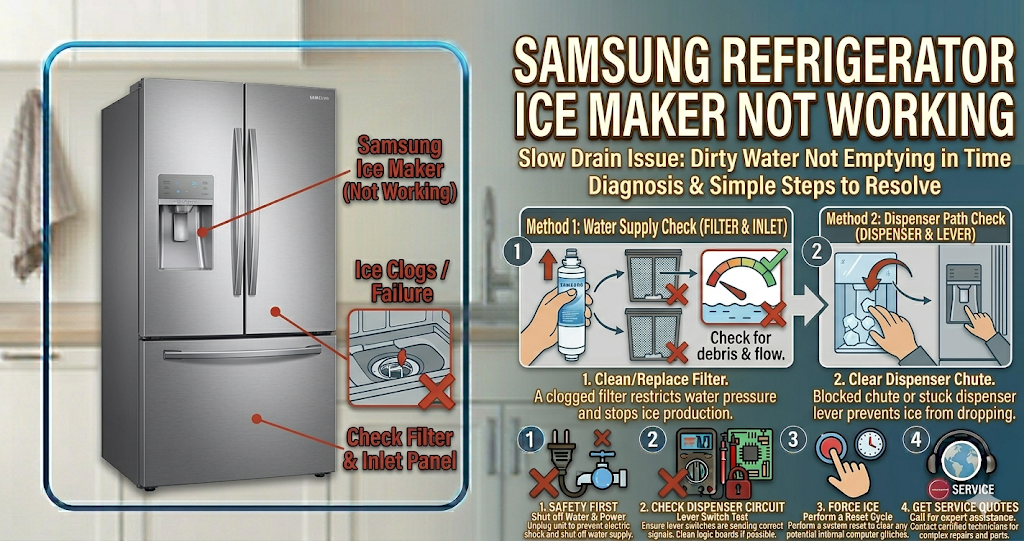
There is nothing more frustrating than going to your refrigerator for a cold drink, only to find your samsung ice maker not working and the ice bucket completely empty. Samsung refrigerators are incredibly popular, but their built-in ice makers are notorious for freezing over, jamming, or simply stopping production out of nowhere. Before you spend hundreds of dollars on a professional service call or buy a bag of ice from the store, you should know that this is usually a simple maintenance issue you can fix yourself.
⚠️ SAFETY FIRST: Always unplug your refrigerator or turn off its circuit breaker before inspecting internal electrical components or moving the fridge to check the water supply line to prevent electric shock.
Why is my Samsung Ice Maker Not Working?
When you realize your samsung ice maker not working, it is rarely a completely broken appliance. Most of the time, the issue stems from a restriction in water flow or a temperature imbalance. The most common culprits include:
- Clogged Water Filter: If you have not changed your refrigerator’s water filter in over six months, the internal mesh can become so clogged with hard water minerals that water cannot flow into the ice tray.
- Frozen Fill Tube: The small plastic tube that drops water into the ice mold can freeze solid, blocking any new water from entering the mechanism.
- Ice Bucket Jam: Sometimes, a clump of partially melted and refrozen ice forms a massive block inside the bucket, jamming the auger motor and preventing the dispenser from working.
- Faulty Water Inlet Valve: Located at the back of the fridge, this electronically controlled valve opens to let water in. If the solenoids fail, no water reaches the ice maker.
Step-by-Step Troubleshooting Guide
If you want to fix a samsung ice maker not working without calling a technician, grab a towel, a hairdryer, and follow these actionable DIY steps:
- Check the Water Filter: Try dispensing a glass of water from the door. If the water pressure is incredibly slow or nonexistent, replace your water filter immediately. A fresh filter often restores ice production within 24 hours, completely fixing the samsung ice maker not working issue.
- Inspect the Ice Bucket: Remove the ice bucket from the door or the top shelf. Look for large chunks of fused ice. Dump the bucket into the sink, wash it out with warm water, dry it completely, and put it back.
- Defrost the Fill Tube: If you see a solid blockage of ice inside the ice maker compartment, use a hairdryer on a low, warm setting to gently melt the ice block. Do not use high heat, as you will warp the plastic housing.
- Check the Water Supply: Pull the fridge away from the wall and ensure the home’s water supply valve (usually a small copper handle behind the fridge) is fully in the “On” position and the plastic hose is not kinked.
How to Reset a Samsung Ice Maker
Often, the fastest way to resolve the samsung ice maker not working issue is to perform a hard reset on the module itself.
Remove the ice bucket to expose the front of the actual ice maker unit. Look for a small, blue or black rectangular button (usually located on the side or bottom of the module). Press and hold this “Test” button for about 5 to 10 seconds until you hear a distinct chime or ding. The ice maker will now run a diagnostic cycle, which takes about 3 minutes. If you hear the motor turning and water filling the tray at the end, your reset was successful!
How to Prevent Future Ice Maker Problems
To prevent a samsung ice maker not working situation from happening again, make sure your freezer temperature is set correctly. Samsung recommends keeping your freezer at 0°F (-18°C). If the freezer is too warm, the ice will not freeze; if it is set too cold, the water fill tube will constantly freeze over.
When to call a professional?
If you have replaced the water filter, melted any visible ice blockages, verified the water pressure, and successfully ran the test chime, but the samsung ice maker not working problem persists for another 24 hours, you likely have a failed main control board or a broken auger motor. At this point, it is highly recommended to contact a certified appliance repair technician to accurately diagnose and replace the complex electronic components.