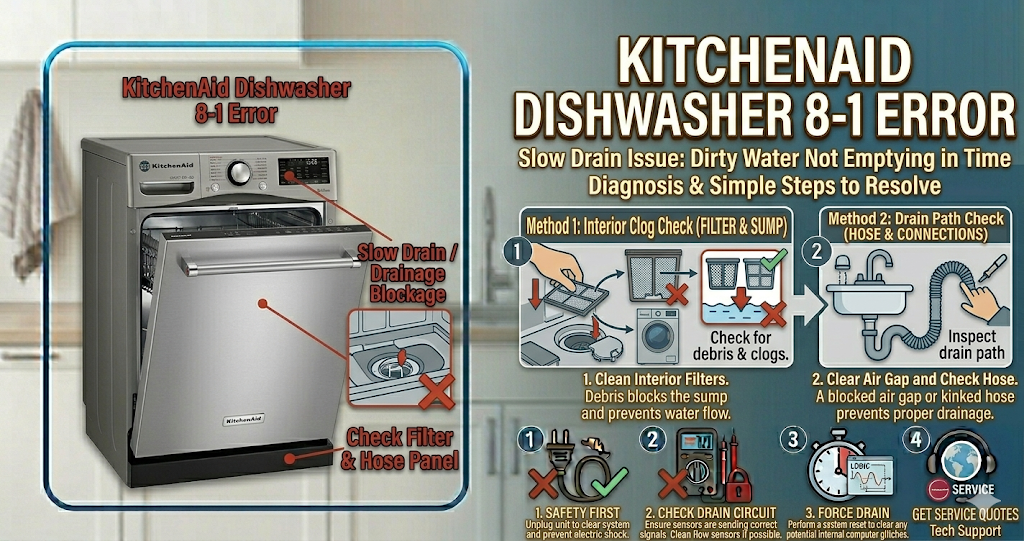
The KitchenAid dishwasher 8-1 error (often seen as a flashing light 8 1 pattern) means the appliance is experiencing a slow drain issue. The dirty water is not emptying within the expected time limit. Fortunately, this is rarely a broken part and is almost always caused by a clog in the filter, the drain hose, or the sink’s garbage disposal.
⚠️ SAFETY FIRST: Always turn off the power to the dishwasher at the circuit breaker before removing the filter assembly or reaching into standing water.
What Causes the KitchenAid dishwasher 8-1 error Code?
When a KitchenAid dishwasher flashes 8 then 1, it detects water left in the sump at the end of a drain cycle. The most common blockages are:
- Clogged sump filter: Food particles, grease, or broken glass have completely blocked the micro-filter at the bottom of the tub.
- Blocked drain hose: The corrugated hose under your kitchen sink is pinched, kinked, or clogged with gunk.
- Garbage disposal knockout plug: If you recently installed a new garbage disposal, the plastic plug where the dishwasher hose connects might not have been removed.
- Obstructed drain pump: A hard piece of debris has bypassed the filters and jammed the impeller blade inside the drain pump.
How to Fix KitchenAid Dishwasher 8-1 Error Step-by-Step
You can usually resolve this drainage issue in 15 minutes without any special tools:
- Clean the Filter Assembly: Remove the bottom rack. Twist the upper filter assembly counterclockwise and lift it straight out. Remove the lower mesh filter. Wash both parts thoroughly in the sink under warm water, using a soft brush to remove stubborn grease.
- Check the Garbage Disposal: Look under your sink where the dishwasher drain hose connects to the garbage disposal or plumbing pipe. Disconnect the hose and use a screwdriver to probe inside the connection port to ensure no food sludge is blocking it. If you have a new disposal, ensure the knockout plug is gone.
- Inspect the Drain Hose: Ensure the drain hose has a “high loop” (the hose should go up higher than the sink drain connection before going down) to prevent sink water from backflowing into the dishwasher. Ensure there are no kinks in the hose.
- Clear the Drain Pump: With the filters removed, check the small sump pit for hard debris like fruit pits or glass. If you see the small impeller blade, gently spin it with a finger or spoon to ensure it moves freely.
How to Prevent the KitchenAid Dishwasher 8-1 Error
Once you have successfully cleared the blockage, you want to make sure the KitchenAid dishwasher 8-1 error does not return to interrupt your daily routine. The most effective way to prevent slow drain issues is through simple, routine maintenance.
Make it a habit to scrape your plates thoroughly into the trash before loading them, as large food remnants and solid fats are the primary culprits for jammed drain pumps. Additionally, try to remove and wash the bottom mesh filter under warm water at least once a month.
Running a specialized dishwasher cleaner or a bowl of white vinegar through a hot, empty cycle every few months will also dissolve hidden grease buildup inside the corrugated drain hose, keeping your appliance draining smoothly and keeping the KitchenAid dishwasher 8-1 error away for good.
How to Reset a KitchenAid Dishwasher (Soft Reset)
After clearing the blockage, you can reset the control board to clear the KitchenAid dishwasher 8-1 error from the system’s memory. Press the “Cancel/Drain” button to force a drain cycle. If the tub empties, the issue is fixed. Alternatively, turn off the circuit breaker to the dishwasher for 5 minutes, then turn it back on to reset the computer.
When to call a professional?
If you have thoroughly cleaned the filters, verified the drain hose is clear, and confirmed the sink plumbing is not backed up, but the KitchenAid dishwasher 8-1 error continues, the drain pump motor itself has likely failed electrically. Since replacing the pump requires uninstalling the dishwasher and accessing the components underneath, it is best to contact a certified local appliance technician.