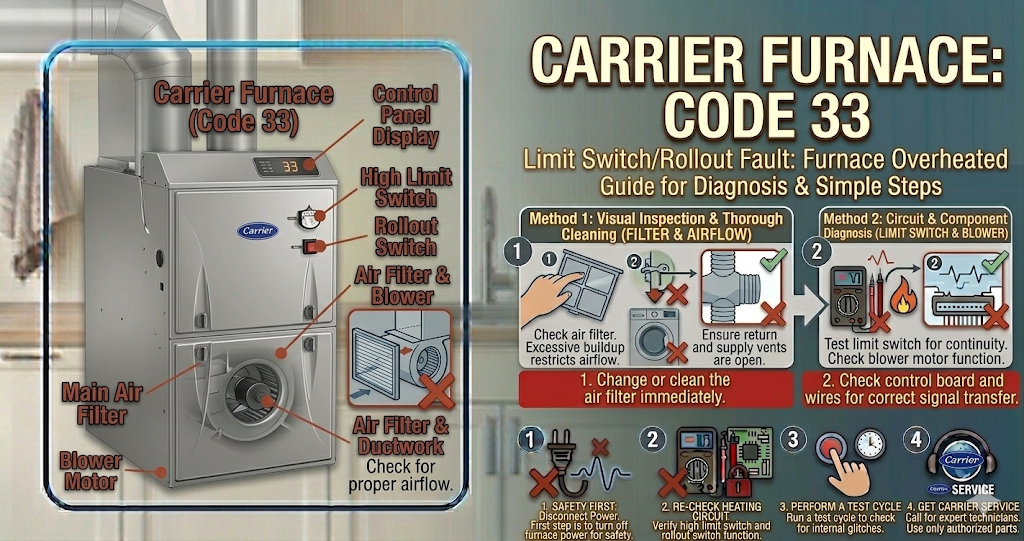
Watching the LED light on your thermostat or control board flash the carrier furnace code 33 during a freezing winter night is enough to cause panic. This specific sequence (three short flashes followed by three long flashes) is a critical safety alert. This fault code translates to a “Limit Circuit Fault.” Essentially, the high-limit switch inside your unit has opened because the internal heat exchanger is getting dangerously hot. To prevent a fire hazard or permanent damage to the metal heat exchanger, the system shuts down the gas burners completely. Fortunately, a carrier furnace code 33 is almost always an airflow issue, meaning you can often fix it yourself in just a few minutes without calling an expensive HVAC technician.
⚠️ SAFETY FIRST: Always turn off the electrical power to your furnace at the main circuit breaker and shut off the gas valve before opening any panels or inspecting components to prevent electric shock and gas leaks.
What Causes the Carrier Furnace Code 33?
When you are trying to diagnose a carrier furnace code 33, you must look for anything that restricts cold return air from entering the system or hot air from leaving it. The most common triggers include:
- Severely Clogged Air Filter: This is the absolute most common cause. A filter packed with dust and pet hair acts like a brick wall, blocking the airflow needed to keep the furnace cool.
- Closed or Blocked Vents: If too many supply registers or return grilles in your home are closed, covered by furniture, or blocked by heavy rugs, the heat gets trapped inside the appliance.
- Dirty Blower Wheel: If the blades on the main blower motor fan are coated in thick dust, the motor cannot push enough air through the ductwork to regulate the internal temperature.
- Failed Limit Switch: Over time, the limit switch itself can wear out from expanding and contracting. It may trip prematurely, falsely triggering the carrier furnace code 33.
How to Fix the Carrier Furnace Code 33 Step-by-Step
You can safely restore airflow, cool down the heat exchanger, and clear the carrier furnace code 33 by following these actionable DIY steps:
- Check and Replace the Air Filter: Turn off the system completely. Locate your air filter and pull it out. If it is entirely grey or you cannot see light passing through it, throw it away. Install a brand-new, correctly sized filter.
- Open All Air Registers: Walk through every room in your house. Ensure that all supply vents and return grilles are fully open and completely unobstructed. Never close vents in unused rooms, as modern HVAC systems need balanced pressure.
- Inspect the Blower Motor: Turn the power back on and listen closely to the furnace. If you hear a low humming sound but feel zero air coming from your vents, the blower motor or its run capacitor has likely failed.
- Reset the System: Once you have replaced the filter and opened the vents, you need to reset the computer. Turn the power off at the breaker for 5 full minutes, then turn it back on. If airflow is restored, the burners will ignite normally.
Preventative Maintenance Tips
The best way to prevent a freezing night interrupted by a carrier furnace code 33 is simple routine maintenance. Make it a strict habit to inspect and replace your standard 1-inch fiberglass air filters every 30 to 60 days during peak heating season.
When to call a professional?
If you have installed a clean filter, opened all vents, and reset the power, but the carrier furnace code 33 continues to flash, your system might have a mechanically failed limit switch, a dead blower motor, or worse, a cracked heat exchanger. Because these repairs require high-voltage testing and handling natural gas lines, it is highly recommended to contact a certified local HVAC professional to safely resolve the issue.