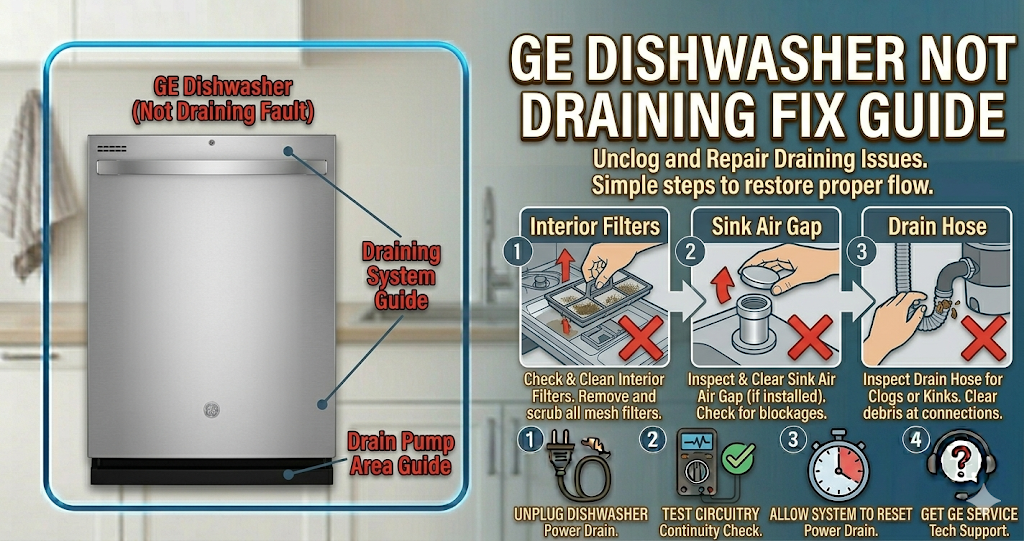
Finding a pool of dirty, stagnant water at the bottom of your machine after a long wash cycle is a clear sign of a GE dishwasher not draining properly. This common plumbing issue can be caused by something as simple as a forgotten food scrap or as technical as a failing motor. Before you start looking for a professional repair service, you can usually identify the source of a GE dishwasher not draining problem by inspecting the filters, the drain hose, and the garbage disposal in just a few minutes with basic household tools.
⚠️ SAFETY FIRST: You will be working near water and electrical components. Always unplug your dishwasher from the wall outlet or flip the dedicated circuit breaker in your electrical panel before reaching into the sump area or disconnecting any hoses to prevent serious electric shock.
What Causes a GE Dishwasher Not Draining?
When your dishwasher fails to pump out the water, it is usually due to a physical blockage or a mechanical failure in the drainage path. The most common triggers for a GE dishwasher not draining include:
- Clogged fine filter: GE dishwashers use a multi-stage filtration system. Over time, grease, labels, and food particles can form a thick “skin” over the fine mesh, preventing water from reaching the drain pump.
- Blocked garbage disposal: If your dishwasher drains into a garbage disposal, any food stuck in the disposal will prevent the dishwasher water from passing through. Note: If you just installed a new disposal, the interior knockout plug might still be in place.
- Kinked or clogged drain hose: The long plastic hose under your sink can get pinched by heavy detergent bottles or develop a clog made of solidified grease and food sludge.
- Faulty drain pump: The small motor responsible for pushing water out can get jammed by a fruit pit or a piece of broken glass, or the motor itself can burn out electrically.
- Stuck check valve: This small rubber flap prevents dirty water from flowing back into the dishwasher. If it gets stuck closed, no water can leave the machine.
Tools You Will Need for This Quick Repair
To properly diagnose and fix a GE dishwasher not draining, gather these basic tools:
- A Phillips-head screwdriver (to remove the lower access panel).
- A pair of pliers (to loosen the drain hose clamps).
- A small bucket and a sponge (to remove the standing water).
- An old toothbrush (to clean the mesh filters).
How to Fix a GE Dishwasher Not Draining Step-by-Step
You can often restore the drainage and clear the water in under 20 minutes by following these actionable DIY troubleshooting steps:
- Clear the Standing Water: Use your bucket and sponge to manually remove the dirty water from the bottom of the tub. This gives you a clear view of the filter area.
- Clean the Filters: Locate the circular filter at the bottom of the tub. Twist it counter-clockwise to remove it. Scrub the mesh under warm soapy water with your toothbrush. Ensure the area underneath the filter is free of debris.
- Check the Garbage Disposal: Turn on your sink’s garbage disposal for 10 seconds to ensure it is completely empty. This is a very common “hidden” cause of drainage issues.
- Inspect the Drain Hose: Look under your sink. Ensure the drain hose is not kinked. If it looks clear, use your pliers to disconnect the hose from the sink drain or disposal. Place the end of the hose in a bucket and start a “Drain” cycle. If water rushes out, the blockage was in your sink plumbing, not the dishwasher.
- Inspect the Drain Pump Impeller: If no water comes out of the hose, remove the lower access panel of the dishwasher. Locate the drain pump. Disconnect the hose and check for obstructions like toothpicks or glass inside the pump’s intake.
How to Reset a GE Dishwasher (Hard Reset)
After cleaning the filters and ensuring the path is clear, you must force the main computer to reboot and clear the error state. Unplug the dishwasher from the power for a full 10 minutes. This allows the internal memory to clear. Plug it back in, close the door, and press the “Start” or “Reset” button for 3 seconds. The machine should enter a 60-second drain cycle.
When to call a professional?
If you have thoroughly cleaned all filters, verified that the drain hose is completely clear, and ensured the garbage disposal is empty, but your GE dishwasher not draining problem continues, the drain pump motor has likely failed. Because replacing the drain pump requires handling high-voltage wiring and working underneath the machine, it is strongly recommended to contact a certified local appliance technician to complete the repair safely. If this doesn’t work, you can explore other general fixes for your household appliances in our main directory.