Opening your fridge doors to find warm milk and melting butter is an absolute nightmare. If you discover your ge refrigerator not cooling, the panic of losing hundreds of dollars in groceries sets in immediately. General Electric makes highly reliable appliances, but like any complex machine, they require routine maintenance. Fortunately, a ge refrigerator not cooling is often caused by a simple airflow restriction or a dirty component, rather than a catastrophic mechanical failure. Before you rush to buy a brand-new appliance or call an expensive technician, try these straightforward troubleshooting steps.
⚠️ SAFETY FIRST: Always unplug your refrigerator from the wall outlet before pulling it away from the wall or accessing internal electrical components to prevent severe electric shock.
Why is my GE Refrigerator Not Cooling?
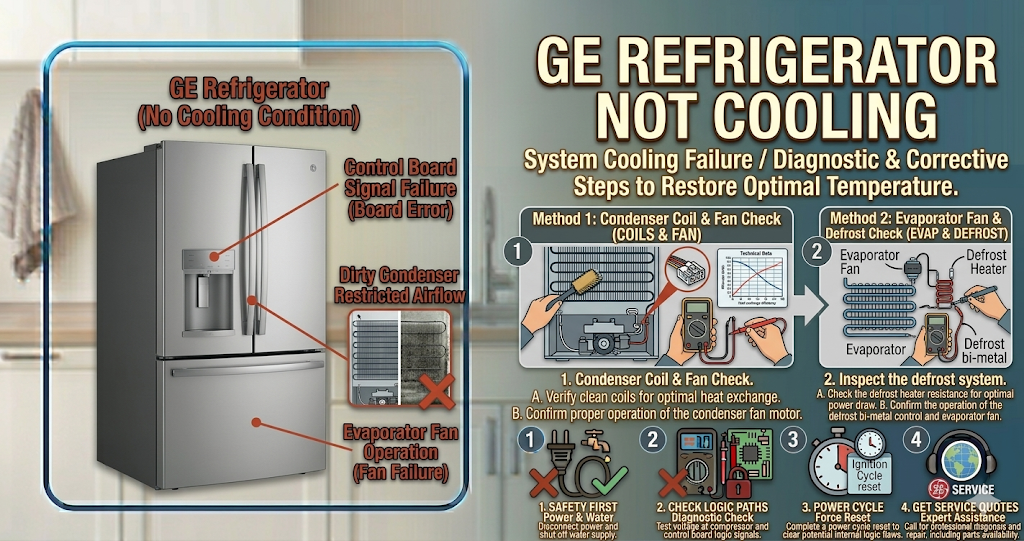
When you are faced with a ge refrigerator not cooling, the issue usually traces back to the system’s ability to circulate cold air or release heat. The most common triggers for this frustrating problem include:
- Dirty Condenser Coils: This is the #1 culprit. Located under or behind the fridge, these metal coils release heat. If they are heavily covered in pet hair and dust, the compressor overheats and shuts down.
- Blocked Air Vents: If you pack too much food directly in front of the vents inside the freezer or fresh food section, the cold air cannot circulate properly.
- Failed Condenser Fan Motor: If the cooling fan located next to the compressor is not spinning, the compressor will overheat, directly resulting in a ge refrigerator not cooling.
- Frosted Evaporator Coils: If the automatic defrost system fails, the internal cooling coils turn into a solid block of ice, blocking all cold air from reaching the fridge compartment.
- Faulty Start Relay: This small electrical part kicks the compressor on. If it burns out, the compressor will never turn on, and the fridge will remain warm.
How to Fix a GE Refrigerator Not Cooling Step-by-Step
You can save a lot of money and permanently resolve a ge refrigerator not cooling by following this actionable DIY checklist:
- Clean the Coils: Pull the fridge completely away from the wall. Remove the bottom grill or back cardboard panel. Use a vacuum with a brush attachment to remove all dust, dirt, and pet hair from the condenser coils.
- Check the Cooling Fan: While the back panel is off, plug the fridge back in for a brief moment. Ensure the fan next to the compressor is spinning freely. If the blade is stuck or the motor is dead, it must be replaced.
- Clear the Internal Vents: Open both doors and ensure no large boxes, bags, or tall containers are blocking the air vents between the freezer and the fridge.
- Inspect for Heavy Frost: Look at the back wall of your freezer section. If it looks like a snowstorm inside or the plastic is bulging with thick ice, you have a defrost issue causing your ge refrigerator not cooling. You will need to manually defrost the unit and likely replace the defrost heater or thermostat.
Preventative Maintenance Tips
The absolute easiest way to prevent a ge refrigerator not cooling situation in the future is to clean the external condenser coils every six months. If you have pets that shed heavily, you should clean these coils every three months to ensure maximum airflow.
When to call a professional?
If you have thoroughly cleaned the coils, verified the fans are running, and made sure the interior vents are completely clear, but the ge refrigerator not cooling problem persists after 24 hours, you are likely dealing with a sealed system issue. Problems like a Freon leak or a mechanically locked compressor require specialized tools and EPA licenses to repair safely. At this point, you must contact a certified local appliance technician to properly diagnose the appliance.