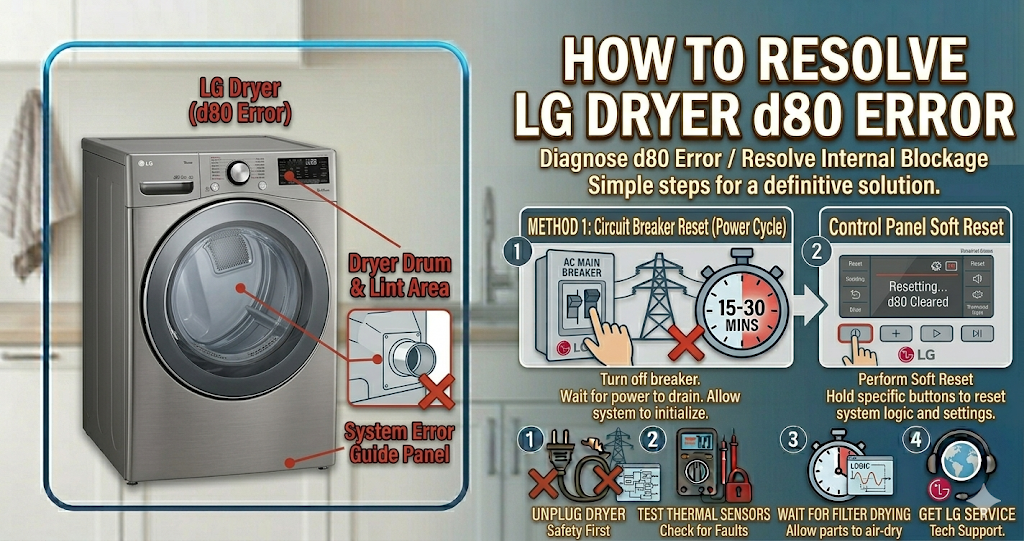
The LG dryer d80 error code is a critical warning from your appliance indicating that there is an 80% blockage in your exhaust duct system. When this code appears on your digital display, the machine will usually stop mid-cycle to prevent the internal heating element from overheating. Ignoring an LG dryer d80 error can lead to incredibly long drying times, wasted electricity, and most importantly, a severe fire hazard in your home due to trapped lint igniting. Fortunately, this is a maintenance issue that you can usually fix yourself with some basic cleaning tools.
⚠️ SAFETY FIRST: Always unplug your dryer from the electrical outlet or shut off the gas valve (if you have a gas dryer) before disconnecting the exhaust duct to prevent accidental shocks, gas leaks, or burns from hot components.
What Causes the LG Dryer d80 Error Code?
When your machine displays the LG dryer d80 error, it means the internal temperature sensors and airflow monitors have detected that hot, moist air cannot escape the drum. The most frequent triggers for this severe airflow restriction include:
- Clogged lint filter housing: Even if you clean the removable lint screen before every load, fine debris can build up deep inside the slot where the screen sits, eventually choking the internal blower fan.
- Crushed transition hose: The flexible foil or plastic hose connecting the back of your dryer to the wall is easily crushed if the appliance is pushed too far back, instantly restricting airflow.
- Clogged wall duct: Over the years, lint, pet hair, and moisture mix to form a thick, cement-like blockage inside the rigid metal pipes hidden inside your walls.
- Blocked exterior vent hood: The flapper valve on the outside of your house (where the air exits) can get stuck closed due to rust, or birds and rodents may build nests inside the warm opening.
Tools You Will Need for This Maintenance
To properly diagnose and clear the LG dryer d80 error, gather these basic household items:
- A vacuum cleaner with a long crevice attachment.
- A screwdriver or nut driver (to loosen the hose clamps).
- A specialized dryer vent cleaning brush kit (highly recommended for wall ducts).
- Heavy-duty gloves and a trash bag.
How to Fix LG Dryer d80 Error Step-by-Step
You can often restore perfect airflow and completely resolve the LG dryer d80 error in under 45 minutes by following these actionable DIY cleaning steps:
- Clean the Internal Lint Slot: Remove the lint screen. Use your vacuum’s long crevice tool to suck out all the hidden lint buried deep inside the filter housing at the front of the dryer.
- Inspect the Exterior Vent: Go outside your house and find where the dryer exhaust exits. Ensure the flapper opens freely and use your hands (wearing gloves) to pull out any visible lint blockages or bird nests.
- Disconnect the Back Hose: Pull the dryer away from the wall. Unplug it. Loosen the metal clamp holding the flexible hose to the back of the dryer. Look inside the machine’s exhaust port and vacuum out any buildup.
- Clean the Transition Hose: Stretch the flexible hose out and look through it. If it is severely kinked, ripped, or heavily coated in sticky lint, replace it with a new semi-rigid metal hose.
- Brush the Wall Duct: If the hose is clear, the blockage is in your wall. Feed a flexible dryer vent cleaning brush into the wall duct, spinning it to break up the clogs, while using your vacuum to catch the falling debris.
How to Reset the Appliance
Once everything is clean and securely reconnected, plug the appliance back in. Turn it on and run a “Timed Dry” cycle on high heat for 10 minutes with the machine completely empty. This will blow out any remaining loose dust and allow the sensors to verify the airflow, clearing the code from the system.
When to call a professional?
If you have thoroughly cleaned the lint screen housing, installed a new transition hose, and scrubbed the entire length of your wall duct, but the LG dryer d80 error still persists, you might have a faulty thermistor (temperature sensor) or a failing blower motor fan. Because testing these internal components requires disassembling the entire cabinet and using a multimeter, it is strongly recommended to contact a certified appliance technician to complete the repair safely.