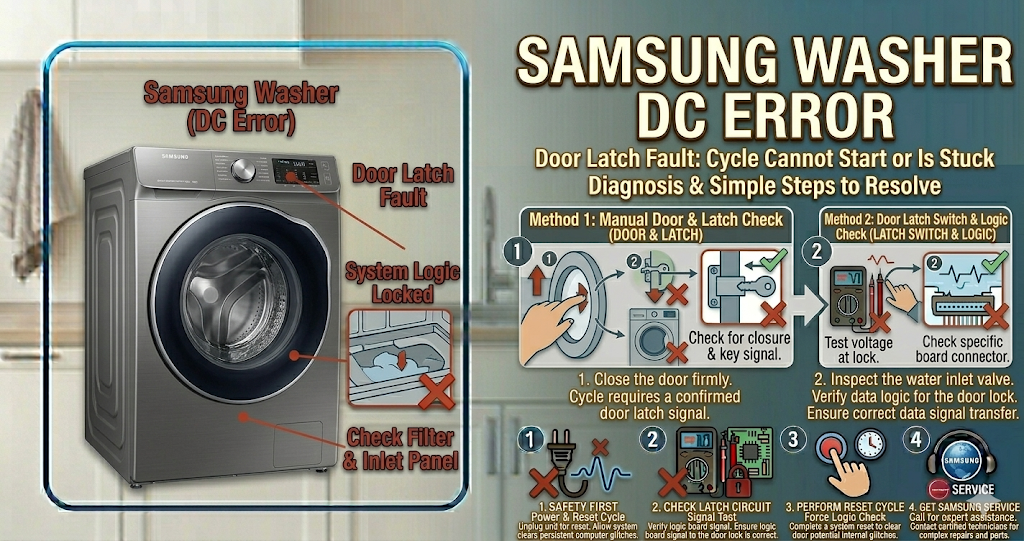
Seeing the samsung washer dc error right when you expect to pull out clean, spun laundry is incredibly frustrating. Instead of damp clothes ready for the dryer, you are left with a soaking wet pile and a machine that refuses to spin.
This specific fault code stands for an “Unbalanced Load” or a lid lock issue. The internal computer detects that the heavy drum is spinning unevenly, which poses a serious risk of damaging the appliance. To protect itself from shaking violently and destroying internal components, the washer stops the cycle entirely.
Fortunately, you can usually fix this issue in a matter of minutes without spending money on a professional technician. Whether you have a front-load or a top-load model, understanding this code is the key to getting your laundry routine back on track.
⚠️ SAFETY FIRST: Always unplug your washing machine from the wall outlet before attempting to move it, inspect suspension parts, or access internal electrical components to prevent severe electric shock.
What Causes the Samsung Washer DC Error?
When your digital display flashes the samsung washer dc error, the machine is actively alerting you to a physical imbalance or a sensor failure. The most frequent triggers for this spin cycle interruption include:
- Uneven Laundry Load: Washing a single heavy item (like a thick blanket, a heavy coat, or a large towel) alongside much lighter clothes causes all the water weight to shift to one side of the drum.
- Machine Not Level: If the washer itself is not sitting perfectly flat on your laundry room floor, the drum will naturally lean. This tilt can easily trigger the samsung washer dc error mid-cycle when the spin speeds increase.
- Worn Suspension Rods: In top-loading Samsung washers, the tub hangs from four spring-loaded suspension rods. If these springs lose their tension over time, the tub bounces out of control and hits the outer cabinet.
- Faulty Door Lock Switch: If the washer’s computer mistakenly thinks the lid is open during the spin cycle because of a bad door switch or a broken plastic latch, it will throw this exact same code.
How to Fix the Samsung Washer DC Error Step-by-Step
You can safely diagnose the unbalanced drum and permanently resolve the samsung washer dc error by following these actionable DIY troubleshooting steps:
- Redistribute the Clothes: Open the door and manually untangle the wet laundry. Distribute the weight evenly around the agitator or the sides of the drum. Close the lid and press the Start/Pause button to see if this simple adjustment can clear the samsung washer dc error instantly.
- Check the Machine Level: Place a standard bubble level on top of the washer. If the bubble is not dead center, use a wrench to adjust the threaded leveling legs at the bottom corners of the machine until it sits perfectly flat. Tighten the locking nuts so the legs do not shift during future wash cycles.
- Test the Suspension Rods: Open the lid and push down firmly on the top edge of the internal tub, then let go. It should bounce up and stop immediately. If it bounces up and down several times like a trampoline, the rods are completely worn out. Replacing the four suspension rods is the ultimate fix for a persistent samsung washer dc error in top-loading models.
- Inspect the Lid Latch: Ensure the plastic strike on the door is not broken and that it securely clicks into the lock mechanism when closed.
How to Prevent Future Imbalance Issues
The absolute best way to prevent a samsung washer dc error from interrupting your laundry day is to wash similar items together. Avoid washing one heavy bath mat by itself; instead, add a few extra towels to balance the water weight evenly inside the drum.
When to call a professional?
If you have leveled the appliance perfectly, evenly distributed your laundry, and even replaced the suspension rods, but the samsung washer dc error immediately returns, you might be dealing with a faulty main electronic control board or a defective motor hall sensor. Because testing these delicate components requires a multimeter and advanced knowledge of electrical schematics, it is highly recommended to contact a certified local appliance technician to safely complete the repair.